A reader’s guide
Revelation Reboot: context, compassion and responsibility
One book in two parts: How We Got Here, followed by Revelation Reboot: How to Read the Book. Explore inherited interpretations, John’s ancient world, and the call to peace, love and compassion.
Begin with the author’s foreword and the summary of Part 1. You can explore the history in How We Got Here or follow the summary’s link straight to Part 2. Both parts are included in every PDF, EPUB and paperback.
Revelation Reboot
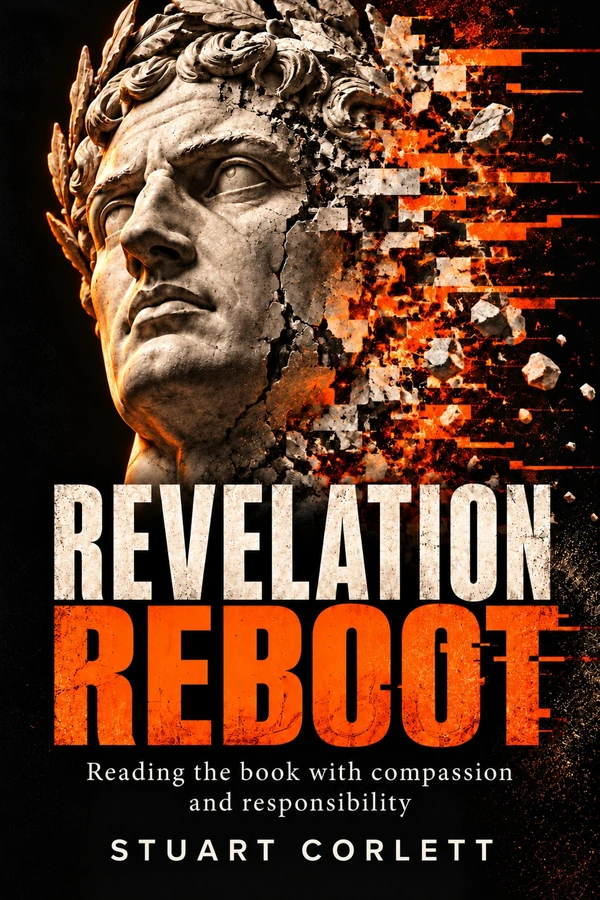
A clear two-part guide to Revelation: How We Got Here, followed by How to Read the Book. One author’s foreword, a short summary with a direct route to Part 2, and four framed discussion pages.
Explore the book Author’s foreword
Two parts, one book
Revelation Reboot opens with one author’s foreword and a short summary of Part 1. Part 1, How We Got Here, examines Darby, Scofield and the interpretations we inherit. Part 2, Revelation Reboot: How to Read the Book, returns to John’s world and explores peace, love and compassion. You can follow a link from the summary straight to Part 2.
The combined edition includes twelve reader-focused questions across four illustrated writing pages, along with the supporting source notes, historical appendices and reference glossary.
A few things to know
Where should I begin?
Begin with the author’s foreword and the summary of Part 1. Continue into How We Got Here for the history, or follow the summary’s link straight to Part 2: Revelation Reboot — How to Read the Book.
Who is the book for?
Readers curious about Revelation, those questioning end-times teaching, and groups discussing faith, history and responsibility.
What does a digital purchase include?
The complete combined book in PDF and EPUB, including all twelve discussion questions. The paperback has four framed discussion pages with space to write.
For yourself or your book club
Questions to take into the conversation
- 1. What did you like most, and what did you find difficult or unconvincing? Which passage or story stayed with you, and why?
- 2. What ideas about Revelation did you bring to this book? Where did they come from, and how has your reading confirmed, challenged or changed them?
- 3. How did you feel while reading: hopeful, defensive, relieved, unsettled, or something else? What might that response help you understand about your own faith or assumptions?
- 4. Think of a belief you first accepted because someone you trusted taught it. How could you test it fairly without dismissing either that person or your own questions?
- 5. The book asks what a passage says, what an interpretive system adds, and what happens when that addition becomes unquestioned. Choose one example from Part One. How persuasive is the argument, and what evidence might change your mind?
- 6. When you encounter news of war or disaster, what is your first response? How might your beliefs about the future affect the attention, compassion or practical help you offer people suffering now?
- 7. John hears of a lion but sees a wounded Lamb. What does that image challenge in your understanding of strength, leadership or success? Where could you practise a different use of power?
- 8. Where do you draw the line between seeking justice and wanting revenge? How could you protect victims, set firm boundaries and hold people accountable without making cruelty acceptable?
- 9. Which human story in Part Two most challenged the way you live? What small, realistic action could you take in response, and what might make that action costly?
- 10. Where do you benefit from arrangements that may harm people you seldom see? How could you investigate one example honestly and respond without pretending you can solve everything?
- 11. Which interpretation in the book do you still question, especially its treatment of violent imagery or the promise of “soon”? How can your group make room for disagreement while continuing to learn?
- 12. The final vision has open gates. What would a more welcoming, truthful and compassionate community look like where you live? Choose one commitment for the coming month and decide how you will follow it through.
Discuss these after reading; answers may reveal parts of the story.